
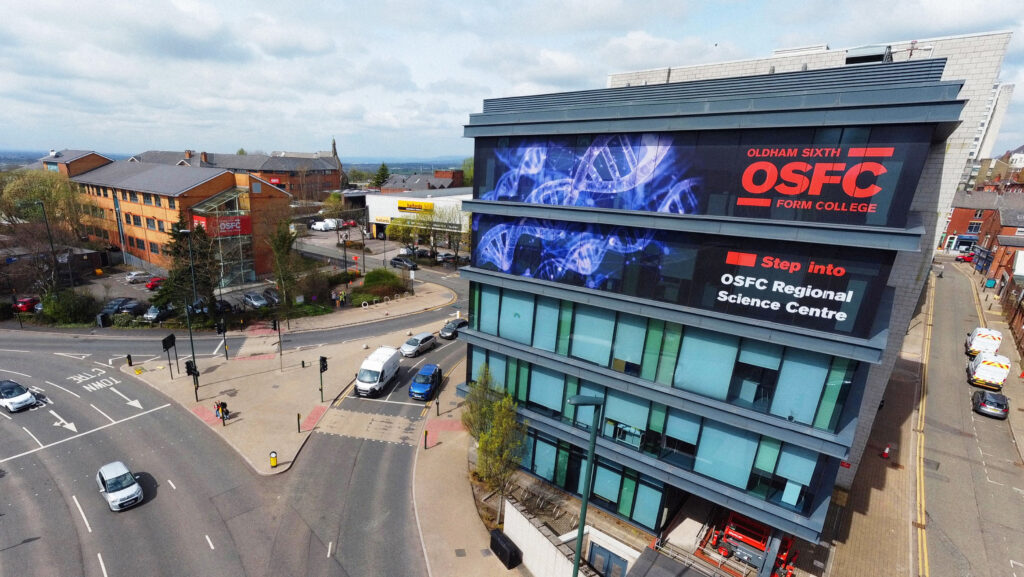




Designing effective school campus signage is essential for creating safe, accessible, and welcoming educational environments. From primary schools to expansive university grounds, well-planned school campus signage streamlines daily navigation for students, visitors, and emergency services while reinforcing school identity across every building fascia and entrance.
Educational institutions always have to balance strict budget limits and funding reviews. Signage should be a long-term investment that lasts for years, rather than something you have to constantly fix or replace.
School corridors, playgrounds, and common areas are busy, high-traffic places. School campus signage needs to stand up to the unpredictable British weather, while indoor signs need to handle the daily bumps and scrapes of school life.
Choosing tough, high-quality materials like premium aluminium, solid acrylics, and impact-resistant polycarbonate stops signs from looking tired too quickly. Adding clever extras like anti-graffiti laminates and scratch-resistant coatings keeps everything looking fresh for over a decade. Our friendly technical consultancy team works closely with you to pick the right materials, helping your estate budget go much further.
Keeping a campus safe is the most important part of any school layout. School campus signage plays a huge role in emergency planning, safeguarding, and directing traffic safely.
Clear, easy-to-see fire exit graphics, assembly point signs, and emergency directions are essential for school regulations. Beyond emergencies, outdoor totems and post-mounted signs help set clear speed limits for cars, point out pedestrian zones, and keep restricted areas secure.
Using highly reflective films means your critical safety messages stay completely visible during dark winter mornings and evening parent nights.
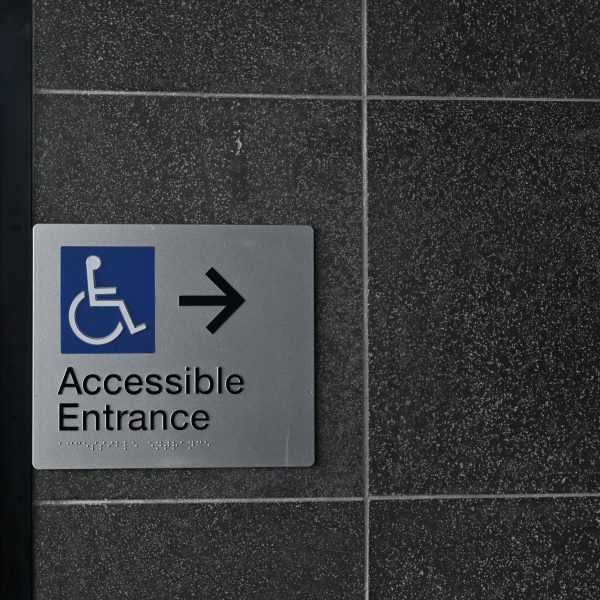
True inclusivity means creating a campus that welcomes every single visitor, student, and staff member from the moment they arrive. School campus signage should help people navigate easily, no matter their physical, sensory, or cognitive needs.
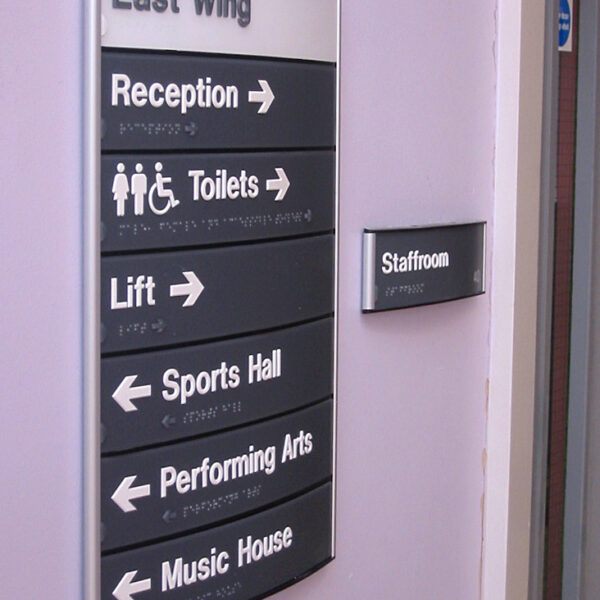
Adding raised lettering and accurate Grade 2 Braille to classroom door signs and directional panels keeps your school fully accessible and DDA compliant. For schools looking to refresh their corridors, investing in specialized Braille and tactile signage makes it simple to blend these accessible features into your wider estate design. It is also smart to use high-contrast colours and clean, simple fonts to help visually impaired visitors find their way.
For larger or multicultural schools, using universally understood symbols alongside text removes language barriers and helps younger children who are still learning to read.
Modern school construction and estate management place a huge focus on being environmentally friendly. Choosing sustainable signage solutions is an easy way for schools to lower their environmental impact and hit green targets.
The materials you choose make a big difference. Opting for sign systems made from recycled aluminium alloys, bio-plastics, or responsibly sourced timber keeps your project as green as possible.
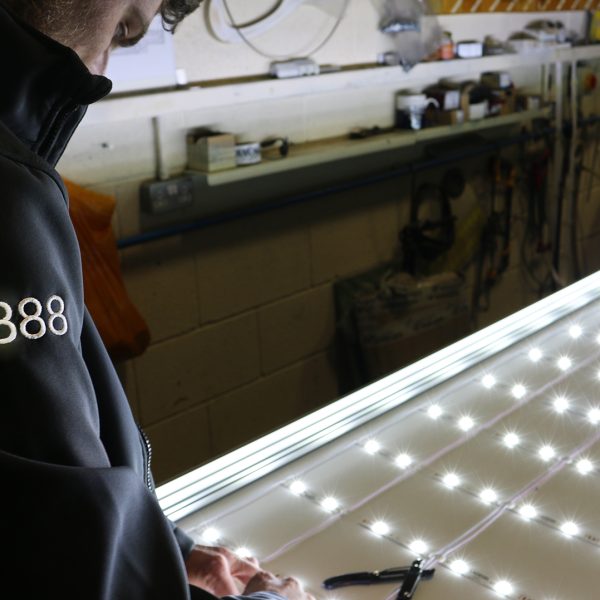
You can also swap out old, power-hungry neon or fluorescent outdoor signs for smart, low-voltage LED lighting. This simple switch drastically cuts your ongoing energy bills and reduces your day-to-day running costs.
We use cookies to improve your experience on our site. By using our site, you consent to cookies.
Manage your cookie preferences below:
Essential cookies enable basic functions and are necessary for the proper function of the website.
These cookies are needed for adding comments on this website.
Google reCAPTCHA helps protect websites from spam and abuse by verifying user interactions through challenges.
Statistics cookies collect information anonymously. This information helps us understand how visitors use our website.
Google Analytics is a powerful tool that tracks and analyzes website traffic for informed marketing decisions.
Service URL: policies.google.com (opens in a new window)
Clarity is a web analytics service that tracks and reports website traffic.
Service URL: clarity.microsoft.com (opens in a new window)
You can find more information in our Cookie Policy and Privacy Policy.