
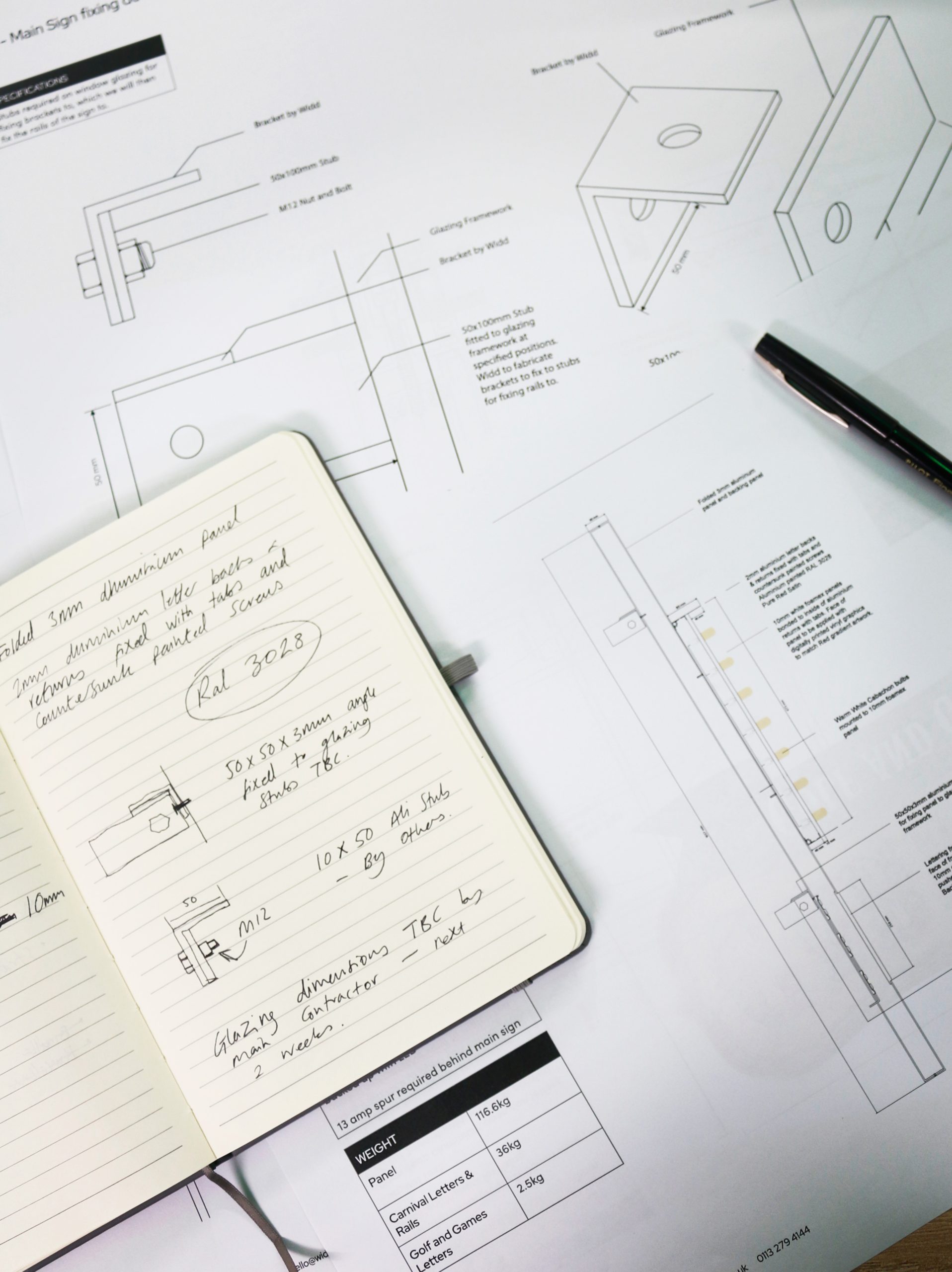


Signage is often included in architectural renders and client guidelines, but without early engagement with experienced signmakers, project schedules and budgets are quickly put at risk. Prioritizing early engagement during the design phase ensures seamless material procurement, accurate structural engineering, and compliant on-site installation across commercial estates.
A report published this month by the Centre for Construction Best Practice analysed 412 public sector construction projects and tracked what happened to budgets and programmes depending on when specialist contractors were involved. Projects where specialists were brought in at later design stages ran between 8.5% and 17.3% over budget on average. Projects with early specialist involvement, came in consistently on or under budget.
The report’s conclusion is straightforward: once the design is fixed, you stop reducing risk and start incurring the cost of it.
That holds true across construction. For signage specifically, the decisions that create most of the downstream difficulty are often made at exactly the stage where a conversation with us would have been most useful.
It’s rarely a case of signage being ignored at design stage. The issue is more specific than that. Concepts get developed, materials get referenced, sign types get indicated – all without the manufacturing and installation knowledge that would tell you whether those choices are achievable, what they’ll actually cost, or whether they’ll create problems further down the line.
A material specified for its visual effect might require custom manufacture that needs time unavailable in the programme. A sign type that reads well in a render might demand significant structural wiring that nobody has planned (or budgeted) for. A fixing method chosen for convenience might compromise the recyclability of the whole project over time. None of these are failures of design, they’re gaps in the information available when the decisions were made.
That’s where we and early engagement add most value. Not by taking over the design process, but by being part of the conversation early enough to fill those gaps before they matter.
Across projects, there are a handful of things that come up repeatedly – not because project teams aren’t thorough, but because this is specialist territory that sits outside most design and construction briefs.
Stroke widths and minimum sizes for built-up letters and CNC characters behave very differently in manufacture than they appear on screen. What looks clean at design stage can become a quality or durability risk in production. LED quality and layout inside illuminated signs has a significant effect on colour consistency and longevity. Adhesives selected for cost versus secure fixings won’t show up as an issue initially, but can create avoidable problems over time.
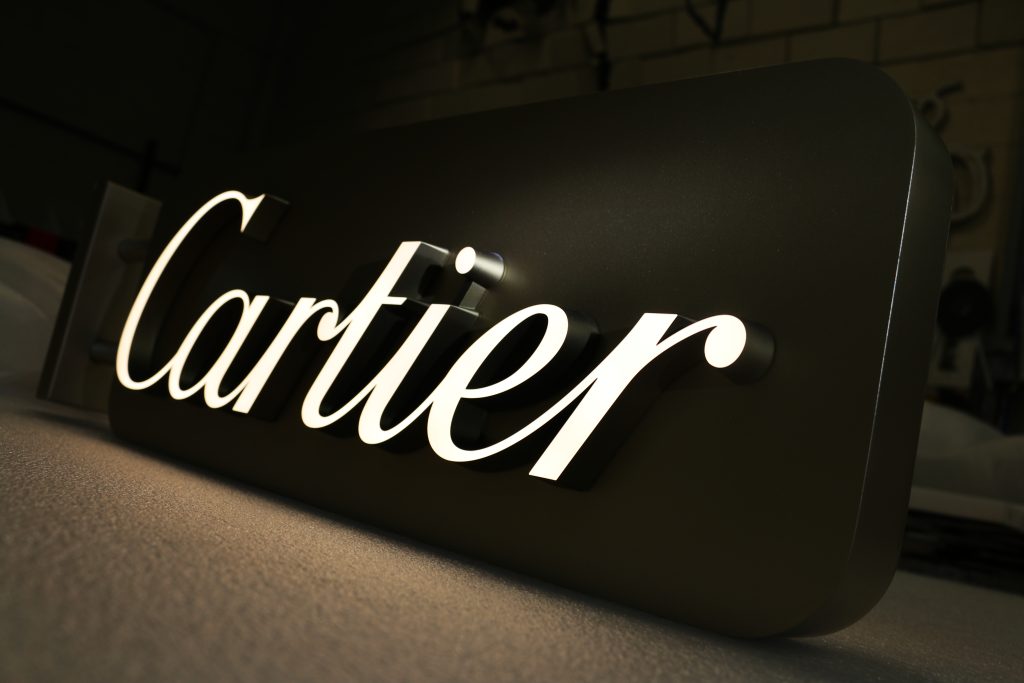
Sign type decisions also carry more downstream consequence than they’re often given credit for. The choice between individually illuminated letters and built-up letters on a flex box affects wiring routes, wall penetration, and install timings. It’s worth having that conversation before the wall is finished. Similarly, a lightbox with a replaceable fabric skin is a fundamentally different proposition to a permanent sign – for brands managing seasonal or event-based messaging, it’s often the smarter specification, but only if it’s designed in from the start.
We also talk a lot about what things cost over time rather than up front. A cheaper specification that needs replacing in three years rarely saves money and can be brand damaging. That’s a conversation that’s much easier to have when the brief is still open.
It doesn’t require a formal appointment or a committed scope. At early design stage, we can review concept renders and flag where the proposed approach will and won’t work in manufacture. We can provide budget ranges across different specification tiers so design decisions are made with cost reality built in. We can advise on material choices that achieve the intended aesthetic and are achievable within programme. We can recommend fixing and construction methods that support end-of-life recyclability where that’s a project priority.
None of that changes the design vision. It just means the path from vision to finished environment is clearer and the risk of hitting a wall later – on budget, programme, or technical grounds, is significantly reduced.
We’ve been manufacturing and installing signage and brand environments for 136 years. The projects that work best, and where we do our best work, are the ones where we’re involved while decisions are still being made rather than after they’ve been taken.
If you have a scheme at early design stage and want a practical steer on what’s achievable, we would be happy to chat with you to ensure the best outcome is achieved – before the spec is set rather than after.
Ready to discuss about your next project?
We use cookies to improve your experience on our site. By using our site, you consent to cookies.
Manage your cookie preferences below:
Essential cookies enable basic functions and are necessary for the proper function of the website.
These cookies are needed for adding comments on this website.
Google reCAPTCHA helps protect websites from spam and abuse by verifying user interactions through challenges.
Statistics cookies collect information anonymously. This information helps us understand how visitors use our website.
Google Analytics is a powerful tool that tracks and analyzes website traffic for informed marketing decisions.
Service URL: policies.google.com (opens in a new window)
Clarity is a web analytics service that tracks and reports website traffic.
Service URL: clarity.microsoft.com (opens in a new window)
You can find more information in our Cookie Policy and Privacy Policy.